DR, Female, Age 24


Exhibit: Lady Desperado

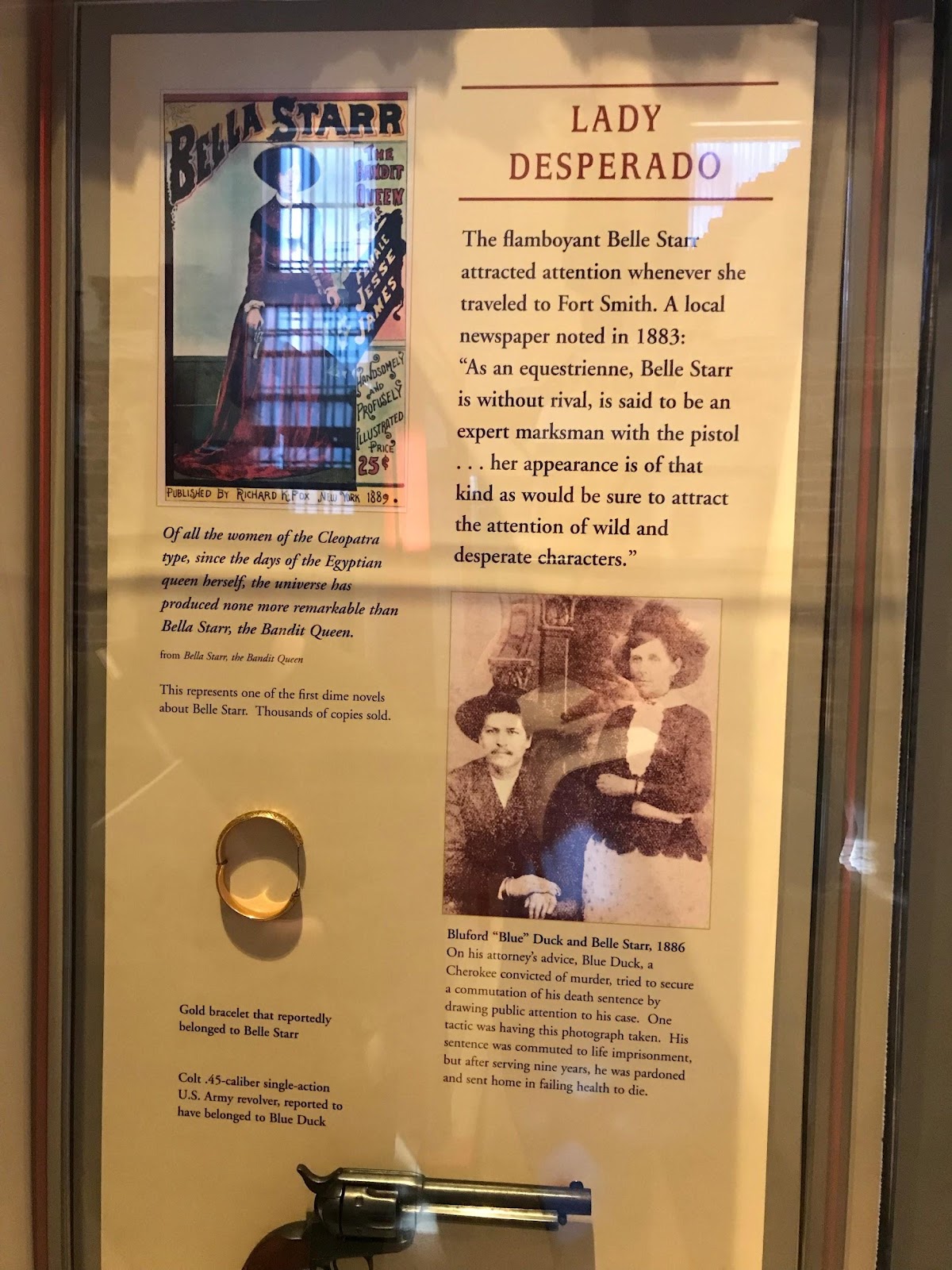
 One of the pieces that stood out to me the most was the section about Belle Starr. She is the only female with her own section in the museum compared to the numerous displays dedicated to men. I noticed that in this particular section her physical appearance is used to describe her, and she is referred to as “flamboyant” and compared to Cleopatra. Out of all of the plaques with men on them none of them described what they looked like, dressed like, or how they drew attention to themselves like hers did. They were remarked on for their accomplishments or their wrong doings, but she is noted for how she looked. 


Exhibit Detail: Photo of Belle Starr

Another point concerning the Belle Starr section is that any time she is mentioned so are the men in her life. This particular picture shows her picture with a short description underneath that talks about her brother and her father. The museum uses her pictures and titles the boards with her name but doesn’t give any real information about her as her own person.
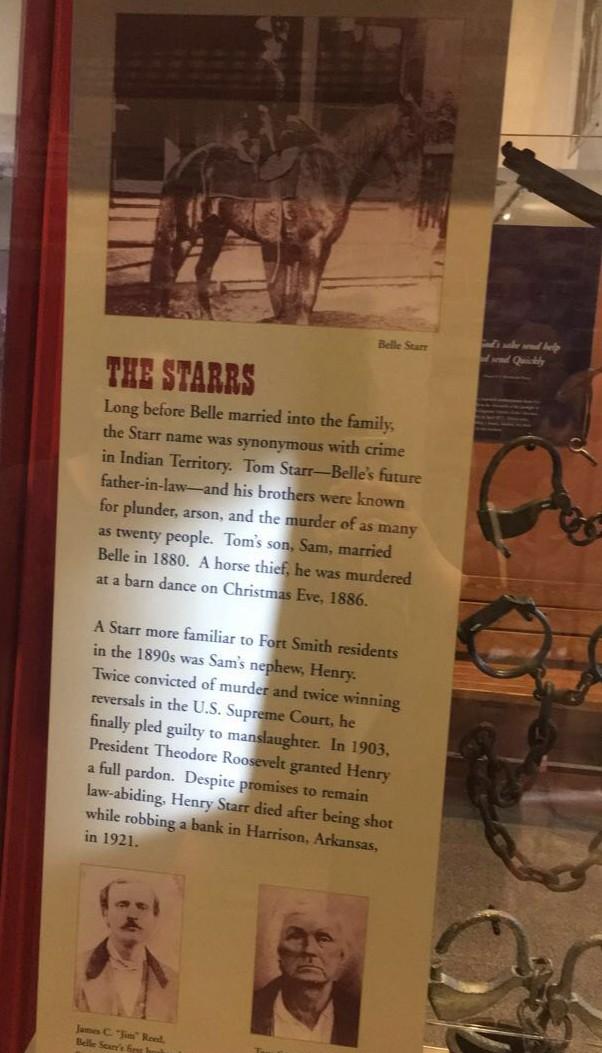


Exhibit: The Starrs

This is the piece that upset me the more I thought about it. This is a section of the board dedicated to Belle Starr and in this piece it talks about how the men in the Starr family were already well-known before she was around. This piece also talks about all of the men in her life and their accomplishments. I see this as a way of taking away her “success” and crediting it to others in her life. It sounds to me as if they want it to be known she wouldn’t have been heard of if not for those men who came before her, like she doesn’t have her own identity.  I noticed this often in the museum. They rarely showcase women, and when they do it paints them in relation to a man in their life. 


Exhibit: The Jailers of Fort Smith

This image shows the jailers of the Fort Smith jail. It stood out to me that they are all white males. I had a hard time finding anything about people of different races while in the museum. 


Comments

Popular posts from this blog

GJ, Female, Age 21

Exhibit Detail: John Rogers and his wife Mary On this page are three examples that I found in the exhibits that list the man that is in the picture and only identify the woman as his wife. Luckily this did not happen too much throughout the museum, but it did occur. Exhibit Detail: Music Class In the picture to the right, there are 9 women featured and none of them are identified by name. I thought this was a real shame considering that they were all associated with the Academy that was helping educate Chickasaw girls. The description is also lacking considering the only thing it mentions is the male Reverend who had direction over the school. I feel like the museum missed a prime opportunity in the caption of this photo. Exhibit Detail: Tullahassee Mission, Creek Nation In the picture to the left, the caption only identifies the woman in the picture as William S. Robertson’s wife. Considering they both taught Creek children in the school I believe that th...

DS, Male, Age 24

Exhibit: Domestic Life at Fort Smith When observing the exhibits at the National Historic Site, they show how most of the political establishments and arrangements where created by men with little involvement from women. The exhibits in regards to politics where mostly pictures and summaries of men, with a very few exceptions like Florence Hammersly being a deputy clerk. When it comes to the focus of women in the exhibits, I feel like it was mainly based of domestication. A good example of this is the exhibit "Domestic Life at Fort Smith", where it focuses on the lives of the wife's of political leaders in Fort Smith. Exhibit:  Music Class I think this photo is relevant to the idea of women being seen in more of a domesticated role during this time. In my opinion, this photo of Chickasaw girls at Bloomfield Academy in a music class shows how women were even educated in more domesticated roles like the arts, instead of politics. Exhibit:  Women...